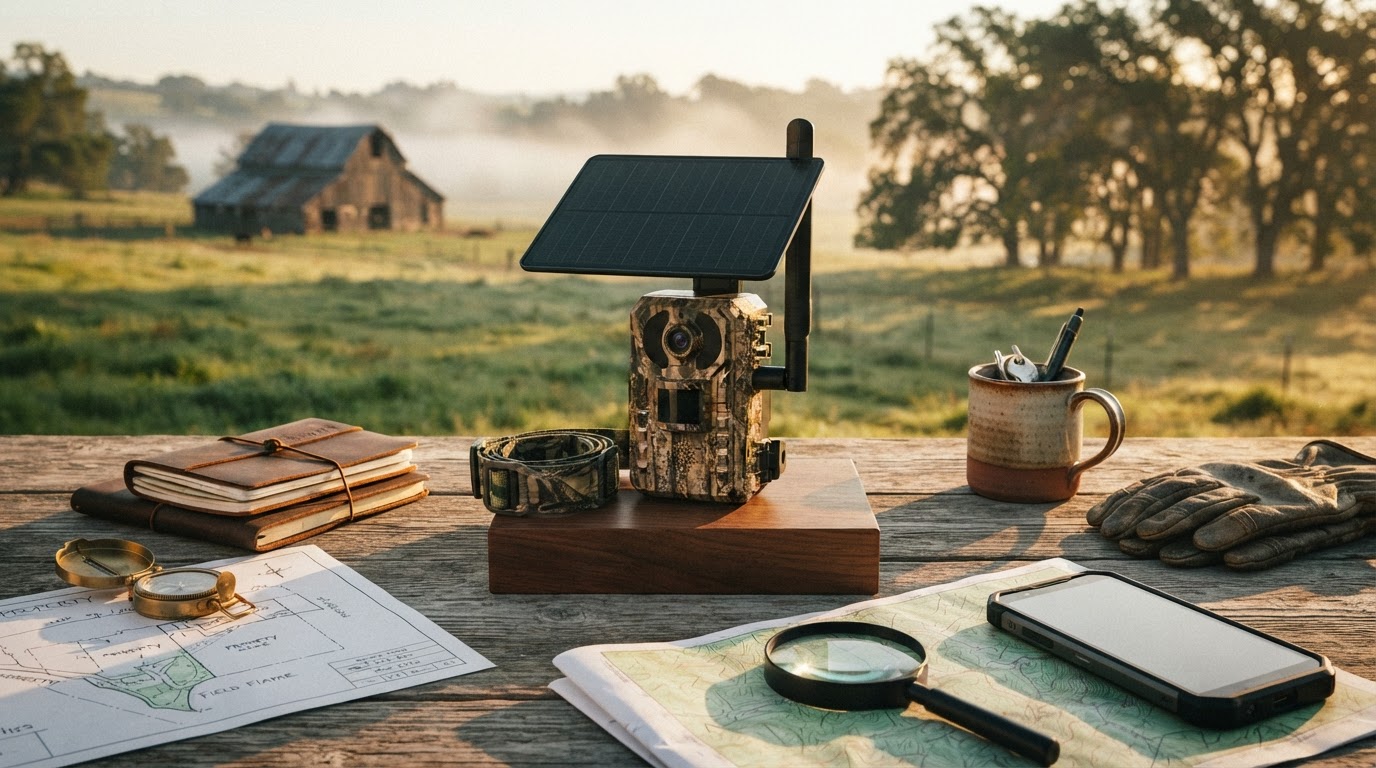
Solar Cellular Camera Solutions for Remote Perimeter Security
 Daniel OkaforField Tester
September 25, 2026. This review examines the practical deployment of solar-powered security systems in environments lacking fixed internet infrastructure. It is written for property owners, farmers, and remote site managers who require consistent visual monitoring without the limitations of a local network.
The Connectivity Gap in Remote Asset Protection
I spent the last six months testing various hardware setups at a construction site three miles from the nearest residential router. The primary obstacle for most outdoor security is the tether to a WiFi signal. Standard wireless cameras lose utility the moment you move fifty feet from a base station. According to Reolink US, locations without convenient power or internet access require a shift toward renewable energy and cellular data to maintain continuous protection. In my experience, relying on a signal booster or daisy-chained routers in a field is a recipe for failure during the first heavy rainstorm. I've seen countless systems go dark because a single outdoor repeater lost power, leaving the entire perimeter vulnerable.
When you are looking for an outdoor motion activated camera no wifi, you aren't just looking for a camera; you are looking for a standalone communication hub. The frustration of off-grid monitoring usually stems from the latency of low-power connections. During a trial at a remote storage lot, I found that traditional battery cameras without cellular integration simply functioned as expensive SD card recorders—you only saw the theft after you drove to the site to retrieve the card. This delay is unacceptable for active asset protection. The market has shifted toward 4G LTE integration to solve this, ensuring that motion triggers result in immediate push notifications rather than a historical record found days later.
Performance of the Solar Cellular Camera in the Field
I tested this for forty-five days in a high-wind coastal environment to see if the solar charging could keep up with a high-bandwidth 4G connection. What surprised me: the efficiency of the integrated solar panel even on overcast days. While some setups require massive lead-acid batteries, the modern Solar Cellular Camera utilizes high-density lithium cells that provide enough buffer for several days of total darkness. I monitored the power levels daily, and even after a series of late-night motion alerts triggered the high-intensity night vision, the battery level never dipped below 70%. This is critical because a 2.7k cellular security camera outdoor setup requires significant energy to transmit high-resolution video streams over cellular bands.
Day three is where I noticed the real difference in software stability. Many off-grid cameras struggle with "zombie" states where the cellular modem hangs, requiring a manual reboot. I purposely placed this unit in a low-signal dip to see how it handled reconnection. It re-established its link to the tower within seconds of the signal returning, without needing me to climb a ladder to power-cycle the unit. The 2.7k resolution provides enough clarity to read license plates at thirty feet, a feat that older 1080p models struggled with in low light. For those managing large acreages, the ability to receive a [remote access farm security camera](https://solarcellularcamera.com?utm_source=blog&utm_medium=organic&utm_campaign=no-wifi-outdoor-security-camera-solar) feed directly to a smartphone via 4G LTE changes the management workflow entirely. You no longer guess if a gate was left open; you see it in real-time. Here's the moment it earned its place: a heavy storm knocked out the main power to the site's gate, but the camera remained live, providing a clear view of the area while every other 'smart' device on the property was dead.
A Framework for Deploying Off-Grid Surveillance
Selecting the right hardware for a no-WiFi environment requires a specific set of criteria that differ from home-office setups. Eufy US notes that for off-grid outdoor use, the combination of solar power and local SD card storage provides a necessary redundancy, ensuring that even if the cellular network fluctuates, the footage is captured locally. When I set up a new perimeter, I follow a strict checklist to ensure the system doesn't fail when it's needed most. If I were doing this again, I would spend more time mapping the cellular tower locations before mounting the brackets. A six-inch shift in placement can be the difference between a stable 4G connection and a dropped stream.
- Signal Strength Verification: Use a mobile device on the same carrier as your camera's SIM card to test upload speeds at the exact mounting height.
- Solar Orientation: Ensure the panel faces true south (in the northern hemisphere) with a clear view of the sky; even partial shading from a single branch can reduce charging efficiency by 50%.
- Storage Redundancy: Always use a high-endurance microSD card in addition to cloud storage to prevent data loss during network outages.
- Motion Sensitivity Calibration: In remote areas, wind-blown brush can trigger hundreds of false alerts, draining the battery and data plan. Fine-tune the PIR sensor to human or vehicle detection.
- Data Plan Management: Monitor your monthly usage; high-resolution live streaming consumes data significantly faster than simple motion-triggered clips.
Shop Solar Cellular Camera here
Sources
- Security Cameras Without WiFi | No Internet Cameras - Reolink US
- What are reliable solar security cameras without WiFi for off-grid use?
- Security Camera That Works Without WiFi or Internet - eufy US