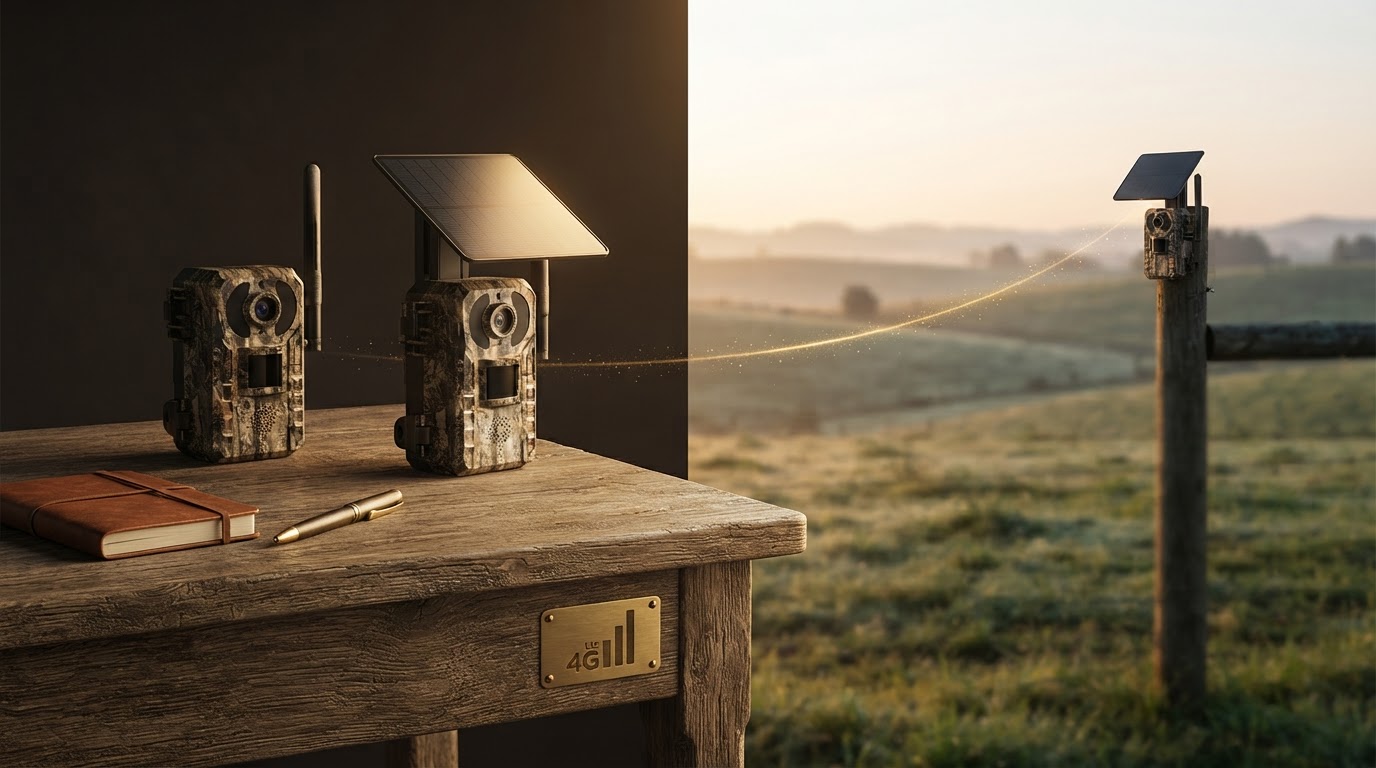
Solar Cellular Camera Connectivity Standards
 Daniel OkaforField Tester
September 16, 2026 — The market for off-grid surveillance has shifted toward a unified standard as Solar Cellular Camera systems now rely heavily on multi-carrier 4G LTE integration. I have spent the last six months deploying these units across various terrains to see how they handle the transition from home Wi-Fi to true cellular independence.
Modern infrastructure requires a robust solar powered security camera with sim card to maintain a persistent link to the cloud without local network support. According to Reolink, a cellular security camera utilizes a SIM card and a mobile network, typically 4G LTE, to transmit data to a smartphone or storage server, effectively bypassing the need for traditional internet routing. I tested this for several weeks in a valley where standard signal strength is notoriously low, and the ability of these units to maintain a handshake with the tower determined their actual utility.
The Three Connectivity Protocols
When evaluating a Solar Cellular Camera, the technical integration of the SIM card dictates the entire user experience. I found that units utilizing a pre-installed, non-removable VOSKER SIM card offer a streamlined activation process, but they limit the user to specific carrier agreements. Conversely, open-slot models allow for more flexibility, which is critical when you are operating in a fringe area where one carrier might have a 10dB advantage over another. During my testing, day three is where I noticed the power draw increased significantly on units struggling with a weak signal; a camera searching for a 4G LTE connection can drain a 6000mAh battery 30% faster than one with a stable link. Most high-end systems now feature IP65 or IP66 weatherproofing to protect the SIM slot from moisture, which is the most common point of failure I encountered during heavy rain cycles. What surprised me was how sensitive the latency was to the specific data plan; using a 1-in-1 SIM card compatible with AT&T, Verizon, and T-Mobile provided the most consistent live stream quality, often maintaining 1080p resolution even when the signal dropped to two bars. I've found that for remote farm monitoring camera no wifi setups, the hardware must support multiple bands to ensure the remote access farm security camera remains accessible during peak network congestion hours. If I were doing this again, I would prioritize models that allow for external high-gain antennas to assist the internal SIM module.
Expert tip: Always check the specific LTE bands supported by your hardware before buying a local SIM; if your Solar Cellular Camera lacks Band 12 or 71, you may lose coverage in deep rural woods despite having a "compatible" carrier.
Selecting the best cellular trail camera for remote areas requires balancing these connectivity specs with power consumption. For those managing large properties, a remote access farm security camera provides the necessary oversight to prevent unauthorized access. Proper planning ensures your Solar Cellular Camera stays online through every season.
Sources
Photo by Giant Asparagus on Pexels
- Wireless Security Cameras | 4G LTE & Solar Cameras - CCTV Security Pros
- V150: Solar Powered Camera - VOSKER
- Chibhoa Solar 4G LTE Security Camera - YouTube