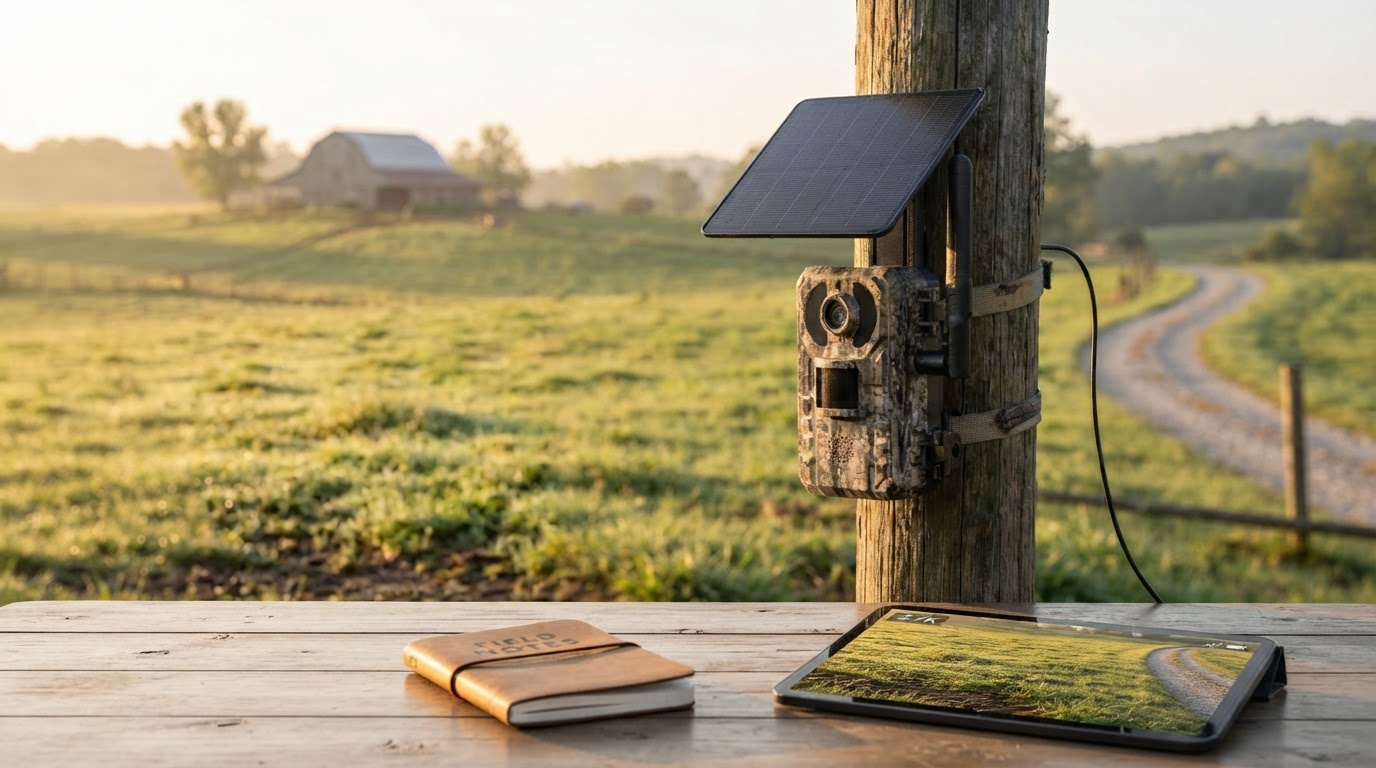
Solar Cellular Camera 2.7K Deployment Strategy
 Priya RamanSenior Analyst
September 27, 2026 — The shift toward high-fidelity remote monitoring has accelerated with the integration of 2.7K resolution into Solar Cellular Camera systems, bridging the gap between standard 1080p and power-hungry 4K units. As property owners seek more granular detail for remote access farm security camera applications, the industry is moving toward a standard that balances data transmission costs with visual clarity.
Recent hardware evaluations from Zetronix indicate that 2.7K SuperHD color video provides a 120-degree ultra-wide field of view, allowing for comprehensive coverage without the pixelation common in lower-resolution alternatives. This resolution tier is particularly effective for identifying license plates or facial features at distances where standard HD fails. When selecting hardware, think of it as a matrix of resolution, power consumption, and network latency. High-resolution sensors require more robust power management, making the synergy between high-capacity batteries and efficient solar panels critical for year-round operation in off-grid environments.
The Three-Axis Resolution Framework
Evaluating a 2.7K cellular security camera outdoor requires analyzing the interaction between the optical sensor, the cellular modem, and the power supply. Two axes matter here: the data throughput required for live streaming and the storage capacity needed for high-bitrate event recording. A 2.7K sensor produces significantly more data than a 1080p sensor, which impacts how quickly a user can access a [cellular trail camera live stream](https://solarcellularcamera.com?utm_source=blog&utm_medium=organic&utm_campaign=2-7k-cellular-security-camera-outdoor-review) during a motion event.
In the context of outdoor motion activated camera no wifi setups, the 2.7K standard typically utilizes 4G LTE or GSM networks to transmit data. According to specifications from Zetronix, these units often feature color night vision and two-way audio, requiring a stable 4G signal to maintain the integrity of the 2.7K stream. For no wifi outdoor security camera solar installations, the decision rule is clear: if the objective is perimeter identification rather than just motion notification, the 2.7K sensor is the minimum viable threshold. These units often feature IP66 or higher weatherproofing to protect the sensitive CMOS sensors and internal 4G modems from environmental degradation. When deploying Solar Cellular Camera Solutions for Remote Perimeter Security, the 360-degree viewing capabilities found in PT (Pan-Tilt) models ensure that the 2.7K resolution is utilized across the entire field of vision, rather than being restricted to a fixed point. Once you see it this way, the choice between standard HD and SuperHD becomes a matter of tactical necessity rather than just a spec upgrade.
Expert tip: When configuring 2.7K cameras for remote locations, set the motion trigger intervals to at least 30 seconds to prevent battery depletion and excessive data usage, as the higher bitrate of 2.7K files can consume monthly data plans faster than standard 1080p footage.
Reliable remote monitoring depends on the seamless integration of high-resolution optics and consistent cellular connectivity.