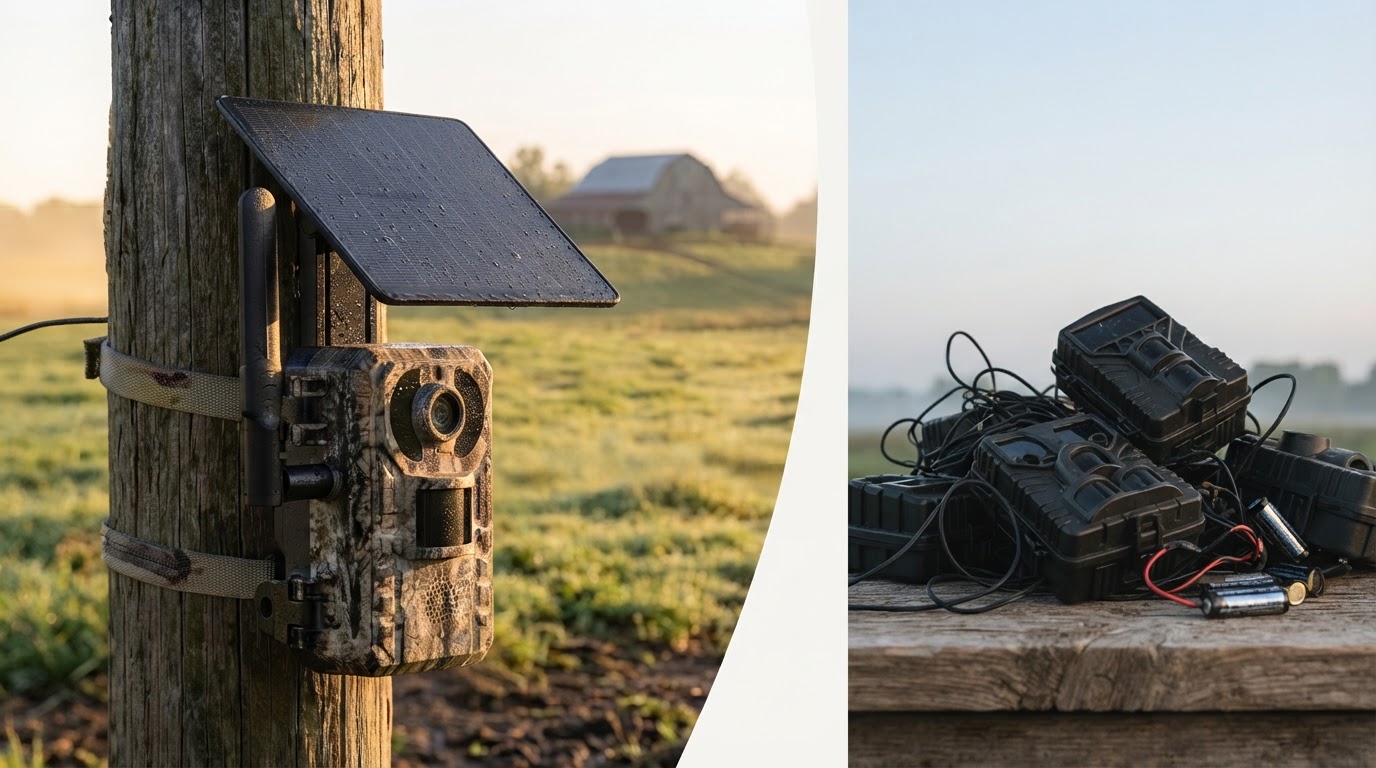
Solar Cellular Camera Value in Remote Hunting Tiers
 Maya ChenContributing Editor
September 24, 2026 — The market for affordable 4G trail cameras is currently flooded with low-cost hardware that often ignores the secondary costs of data and power maintenance. While hunters seek to minimize upfront investment, Solar Cellular Camera technology is shifting the focus toward long-term field reliability and power autonomy.
The conventional wisdom says that starting with the cheapest possible sensor is the most efficient way to scale a scouting network. However, data from Trailcam.org indicates that while models like the Wosports G500 provide high-resolution 30MP imagery at a budget price point, the hidden labor costs of battery swaps in remote areas quickly erode those initial savings. Relying on 4G connectivity without a sustainable power source often leads to mid-season failures that cost more in fuel and time than a premium integrated unit.
The Three Stability Benchmarks
Evaluating a budget 4G trail camera requires looking past the sticker price to three specific stability benchmarks: power draw, signal acquisition, and trigger recovery. Run the math: a standard 2.7k trail camera with night vision and a high-frequency motion trigger will deplete a standard AA battery tray in less than three weeks if placed in a high-traffic area. This makes remote site monitoring with Solar Cellular Camera units a mathematical necessity rather than a luxury. Field testing reported by Field and Stream notes that the Moultrie Edge 4 Solar has become a benchmark for reducing these maintenance trips by integrating the power source directly into the housing. When hardware lacks this integration, users are forced to buy external solar panels or expensive lithium packs, often doubling the total cost of ownership. For those managing multiple sites, configuring Solar Cellular Camera alerts for hunters provides a centralized way to monitor these vitals without physical intervention. Furthermore, the question of whether Solar Cellular Camera units stream live video is central to budget planning; live streaming requires significantly higher bandwidth and power than standard thumbnail uploads, a feature often absent or poorly implemented in sub-$100 models. If the goal is a true cellular trail camera live stream, the hardware must support sustained 4G LTE throughput, which cheaper chips frequently throttle to save power.
Expert tip: Prioritize cameras with an IP66 rating and a dedicated 4G LTE modem rather than generic 3G/4G fallback chips. A cheap camera that constantly hunts for a signal will drain its internal reserve 40% faster than a unit locked onto a stable LTE band.
I’ll change my mind when budget manufacturers provide transparent power-consumption data for their 4G modems under heavy trigger loads. Until then, the integrated solar approach remains the only viable way to avoid the hidden costs of "affordable" remote scouting.
Sources
- Best Value Rated Trail Cameras - Trailcam.org
- The Best Cellular Trail Cameras of 2026, Tested and Reviewed
- The Best Cellular Trail Cameras, Tested and Reviewed - Outdoor Life